

Publications

New Cases on the Observatory: August Round Up
Our Observatory of Planetary Justice Impacts of AI aims to make visible the impacts of the AI supply chain on human and more-than-human communities on the planet. In this blog, we’re rounding up the latest cases added to the Observatory, highlighting how grassroots resistance is shaping the data center landscape in the US and Canada.

New Cases on the Observatory: July Round Up
Our Observatory of Planetary Justice Impacts of AI aims to make visible the impacts of the AI supply chain on human and more-than-human communities on the planet. In this blog, we’re rounding up the latest cases added to the Observatory, focusing on cases from Oceania—a region that has so far been underrepresented in our repository of cases. As the cases below highlight, across Oceania, AI-driven critical mineral extraction and digital infrastructure build-out exposes a familiar political economy in which the eco-social costs of AI development are borne by ecosystems and communities at the frontiers of extraction while the economic and technological benefits are realized elsewhere.

New Cases on the Observatory: June Round Up
Our Observatory of Planetary Justice Impacts of AI aims to make visible the impacts of the AI supply chain on human and more-than-human communities on the planet. In this blog, we’re rounding up the latest cases added to the Observatory, highlighting the ones where affected communities are pushing back against the development of AI infrastructure along the supply chain.

New Cases on the Observatory: May Roundup
The AI models that we use in our day-to-day life are the products of a vast and complex supply chain, the planetary impacts of which we aim to uncover and make visible. Our Observatory of Planetary Justice Impacts of AI aims to make visible the impacts of the AI supply chain on human and more-than-human communities on the planet. In this blog, we are putting the spotlight on a series of new data center projects in Canada and the grassroots movements mobilizing against them.

Reflections from the Student Workshop at the Centre for Computing History
In this blog post, Bella Raja reflects on her recent workshop at the Centre for Computing History in Cambridge, UK. She shares key highlights from the activities with primary and secondary students and reflects on the importance of embedding planetary justice concerns in early childhood AI education.

Observatory Zoom In: London Data Centres
Our Observatory of Planetary Justice Impacts of AI aims to make visible the impacts of the AI supply chain on human and more-than-human communities on the planet. This month, instead of a roundup of the main cases we’ve found, we are putting the spotlight on one particular case: the 50 to 60 new data centres being built in and around London.
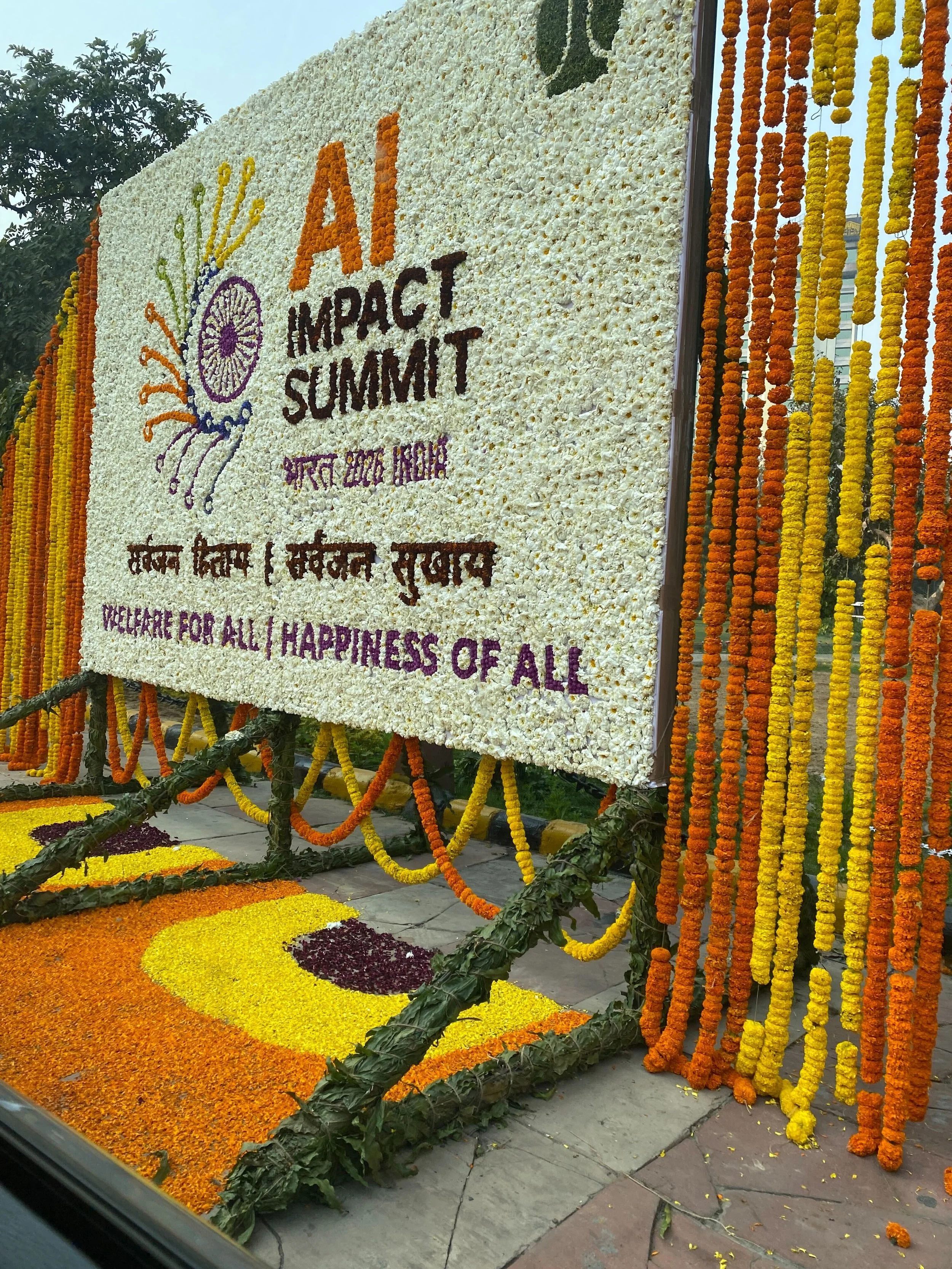
The India AI Impact Summit and the Planet Pillar that Wasn’t
At the 2026 India AI Impact Summit in New Delhi, “Planet” appeared alongside People and Progress as a core pillar of the agenda. Yet meaningful discussion of AI’s environmental footprint remained largely absent. In this reflection, Lakshmee Vinayak Sharma examines how narratives of AI opportunity and sovereignty are accelerating data center expansion across the Global Majority while sidelining the material costs of hyperscale infrastructure–from water and energy demand to land use and governance transparency. The piece calls for AI policy debates to confront these planetary implications and incorporate environmental accountability into the future of AI governance.

New Cases on the Observatory: February Roundup
The AI models that we use in our day-to-day life are the products of a vast and complex supply chain, the planetary impacts of which we aim to uncover and make visible. In our Observatory of Planetary Justice Impacts of AI, we aim to bear witness to the impacts of the AI supply chain, so as to to spread information, share resources, and build a catalogue of real-world examples. In this blog, we highlight five of the ten latest additions to the Observatory, which highlight political and structural injustice throughout the AI supply chain.

New Cases on the Observatory: January Roundup
The AI models that we use in our day-to-day life are the products of a vast and complex supply chain, the planetary impacts of which we aim to uncover and make visible. In our Observatory of Planetary Justice Impacts of AI, we aim to bear witness to the impacts of the AI supply chain, so as to to spread information, share resources, and build a catalogue of real-world examples.
In this blog, we highlight four of the ten latest additions to the Observatory, which highlight some power dynamics reminiscent of coloniality. In collecting these cases, we are looking at the bigger picture and how these cases might be understood through thinking about epistemic justice and neocolonial relations.

AIPJ 2025 Year in Review
2025 marked our first (solar) year as a public Alliance. From mapping AI supply chains and extractive infrastructures to convening dialogues across research, activism, and policy, this recap reflects on a year of collective work grounded in planetary justice, plurality, transparency, and accountability.

New Cases on the Observatory: December Roundup
AI systems are built on global supply chains with deep planetary impacts that often remain hidden. In this update, we document new cases from around the world — from lithium and rare-earth extraction to energy- and water-intensive data centres — showing how narratives of progress in AI mask environmental harm, social inequality, and a lack of transparency.
From lithium mining in Zimbabwe and rare-earth extraction in Myanmar, to data centres in India, the United States, Mexico, the UK, and Germany, these cases challenge dominant narratives of technological progress.

Imaginaries of the Future
Many scholars have talked about the importance of imagination as a tool for resistance, whether it is imagination of possible alternatives for our ways of life, or possible futures for humanity and Earth, positive or negative. Personally, I sometimes find it difficult to become emotionally invested in an environmental or even a political development unless I sit down to imagine, by thinking or by reading, what its impact is or will be on people, ecosystems, and our planet in its plurality. Fiction really helps me in this effort. I have collected here a few of my personal recommendations for novels and stories with really stark imaginations that have impressed onto my brain what the future might look like, which helps me want to shape it.

New Cases on the Observatory: November Roundup
AI has global reach, and global consequences. As we try to examine and map AI and its planetary justice impacts, we want to map and expose the testimonies of real-world impacts of the AI supply chain. In our Observatory of Planetary Justice Impacts of AI, we endeavour to bear witness to the impacts of AI, so as to to spread information, share resources, and build a catalogue of real-world examples. In this blog, we highlight some of the latest additions to the Observatory, which we believe are stark examples of ways in which power and resistance coexist and balance each other at every stage of the AI supply chain and in many locations across the world.
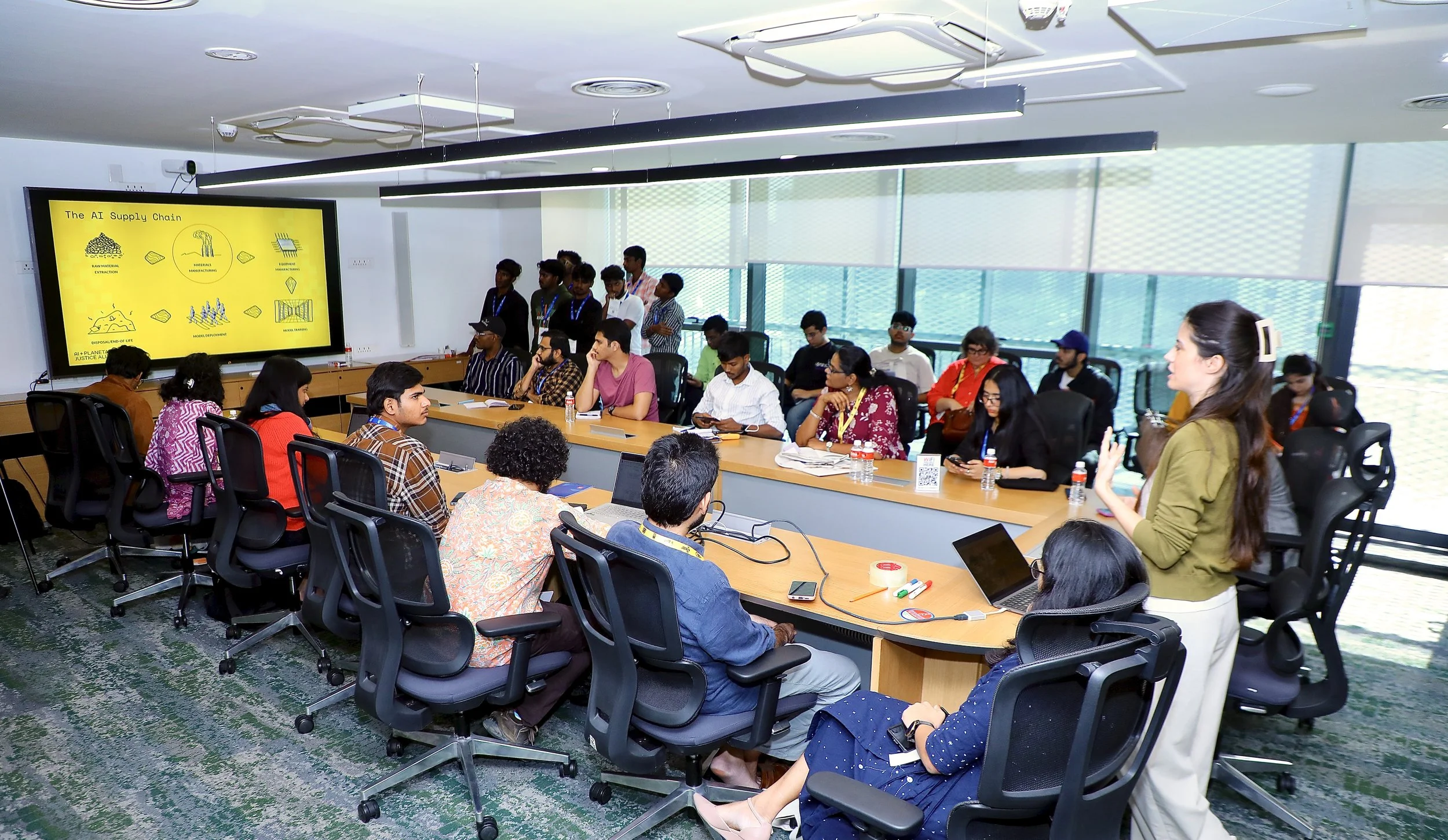
AIPJ at the Digital Citizen Summit in Hyderabad, India
At the Digital Citizen Summit in Hyderabad, the AI + Planetary Justice Alliance (AIPJ) highlighted the hidden social and ecological impacts of AI. On the first day, we led a participatory workshop exploring the AI supply chain—from mineral extraction and hardware manufacturing to data centres and e-waste—using our AI Supply Chain Impact Framework to map environmental, labour, and community effects and discuss local strategies for equitable infrastructure.
On the second day, Sara Marcucci joined a panel situating Hyderabad’s emerging data centre ecosystem within global AI supply chains, emphasizing who benefits and who bears the costs. Discussions focused on alternatives such as smaller-scale AI, meaningful community participation, and governance that treats resources and affected communities as rights-bearing.

New Zine: Raw Materials for AI
Raw Materials for AI is a visual introduction to the physical foundations of artificial intelligence, tracing seven key minerals – like cobalt, silicon, and lithium – used to build and power AI systems. Produced as part of our Below the Algorithm project, the zine invites readers to rethink AI as something rooted in land, labor, and extraction, not just data and code. Rather than offering technical depth, it provides a grounding entry point to begin connecting the dots between the material world and the digital systems built upon it.

New Cases on the Observatory: October Roundup
A new batch of case studies has been added to our Observatory of Planetary Justice Impacts of AI! This is one of our core initiatives, where we map real-world examples of the planetary justice impacts of the AI supply chain. It is a continuous, adaptive effort to collect data, to track cases and investigations, and see what patterns emerge.

From Clouds to Ground: Rethinking Data for AI Through Planetary Justice
In this reflection from the Data for Public Goals event at Politecnico di Milano, we call for a radical reframing of how we understand and govern data for AI. Moving beyond technical metrics and ethical tweaks, the piece introduces a planetary justice lens that traces AI's impacts across its full supply chain–from resource extraction to model deployment. Highlighting the ecological, labor, and epistemic costs embedded in AI systems, the post challenges the narrative of data neutrality and questions the assumption that automation is inherently beneficial. What if, instead of optimizing AI, we asked whether it is needed at all–and who gets to decide?

A Degrowth Perspective on AI: ISEE Degrowth Conference 2025
AI is often seen as the answer to our planetary crises. But what if it’s also part of the problem? In this reflection from the ISEE/Degrowth 2025 Conference, Sara Marcucci argues that AI is not just a neutral tool—it’s a product of growthism and dualism, built on extractive infrastructures and driven by an ideology of more. Drawing on real-world supply chain impacts and grounded community practices, the piece offers a framework for reimagining AI through a degrowth lens: starting with collective purpose, guided by relational values, and enacted through democratic, low-impact practices.

Call for Submissions: Observatory of Planetary Justice Impacts of AI
Tracking and analyzing real-world impacts of the AI supply chain is a key part of our work, and the Observatory of Planetary Justice Impacts of AI is the tool we are using to collect and analyse such examples.
It aims to catalog the different stages of the AI supply chain and the impact that each stage has on various communities from a planetary justice perspective.
It is a dynamic and collaborative collection tool, where categories will evolve to attempt to map out the data as it grows. We aim for the Observatory to be a collaborative and bottom-up effort, therefore we have opened this module for anyone to be able to submit their case-studies for planetary justice impacts of AI.

We Went To Bengaluru, India, and Presented Our Work!
The AI + Planetary Justice Alliance joined researchers, organizers, and practitioners in Bengaluru for the Mapping Data Work workshop — a gathering that foregrounded the invisible labor behind AI systems. In our blog, we report key takeaways, reflect on what it means to build “ethical datasets,” question the assumptions behind datafication, and share insights from our own research on epistemic justice in agricultural AI in India. What if the push to represent is just another form of surveillance? And why are we building AI in the first place? Read the full piece to explore the planetary justice implications of some of AI’s quietest supply chains: data work.