
New Cases on the Observatory: December Roundup
The AI models that we use in our day-to-day life are the products of a vast and complex supply chain, the planetary impacts of which we aim to uncover and make visible. In our Observatory of Planetary Justice Impacts of AI, we aim to bear witness to the impacts of the AI supply chain, so as to to spread information, share resources, and build a catalogue of real-world examples.
Latest cases
In this blog, we highlight some of the latest additions to the Observatory, which focus on changing the narratives of progress around AI and underlining the need for transparency around its development.
Google-backed Data Centre in India: Looming Environmental and Social Disaster
By Human Rights Forum
Google,in partnership with the local conglomerate Adani Group, has put forth a proposal for a new data-center cluster in Andhra Pradesh. The plan to build large-scale data infrastructure spanning 480 acres across several villages is backed by incentives estimated at ₹22,002 crore over two decades, including subsidised power, water, land and tax breaks. The cluster, however, carries the potential for severe environmental, economic and social harm.

The project threatens local water security: the region already grapples with groundwater depletion and erratic rainfall, yet the data-center campus would demand massive water resources for cooling and maintenance. The increased water draw, combined with risks of contamination from waste and chemicals, could displace agriculture and deprive villagers of safe water. On energy, the project would consume electricity comparable to a mid-sized city. Despite claims of “100% renewable energy,” Human Rights Forum points out that the existing grid and infrastructure make such promises implausible; in reality, the demand is likely to be met with fossil-fuel generation, worsening climate and pollution burdens. The economic benefits touted by proponents — jobs, investment, modern infrastructure — could be overstated. Once built, these hyperscale facilities tend to be highly automated, offering only up to a few hundred technical jobs but imposing large-scale land loss, noise, pollution, and long-term environmental stress on communities.
Why Are Plans for This Alabama Data Center So Hush-Hush?
By Willy Blackmore
In Bessemer, Alabama — a city with a majority-Black population — a massive new data center, dubbed Project Marvel, is being proposed by developers Logistic Land Development, LLC. The plan calls for a 4.5-million-square-foot facility on 700 acres of forested land. What’s drawing alarm is the secrecy around it: city leaders including the mayor and city attorney have signed non-disclosure agreements with Logistic Land Development, which means basic questions about the project (environmental impact, water use, pollution, zoning approval details) are not being answered. It is unclear which companies will make use of the data center once it’s built. Opponents including NAACP have formally requested under open-records laws that full environmental impact assessments, water-use data and the signed NDAs be released. The concern is not just the scale: if built, the center could consume roughly as much electricity as a mid-sized city. For local residents, many of whom already live near heavy industry and polluting infrastructure, this raises serious issues of environmental justice. Critics argue that adding yet another massive consumer of energy and water to an already burdened grid serving a marginalized community may offer few real benefits, especially given the lack of transparency.
Zimbabwe’s New Resource Curse
By Adio-Adet Dinika
In rural Zimbabwe, communities around mining districts such as Bikita and Mberengwa are bearing the human cost of the country’s lithium mining boom, driven by surging global demand for batteries connected to artificial intelligence and renewable technologies. On 16 August 2025, three children were injured in blasting operations at Bikita Minerals — the most recent victims in a pattern of accidents. One of the injured children’s parents had previously lost a leg in a workplace accident at the same mine. The tragic circumstances underscore just how immediate and personal the area’s suffering has become.
Lithium output in Zimbabwe has exploded from 800 metric tonnes in 2022 to 22,000 in 2024, transforming the country into Africa’s largest lithium producer. The surge in mining activity has been spurred by over a billion dollars in Chinese investment, which displaced residents whose families have farmed the land for generations. Under existing law, mineral rights override agricultural land rights, allowing companies to bulldoze ancestral land and convert it for mining, often with little regard for community consent or compensation. This is a contemporary example of the “resource curse”: while outside companies profit from lithium needed for green technologies and AI infrastructure, local populations endure environmental destruction, disrupted livelihoods, unsafe working conditions and systemic dispossession. For many families, the promise of economic prosperity has turned into a lived experience of loss, risk and marginalisation — a stark contradiction to the narratives of progress and innovation that lithium mining is often wrapped in globally.
Energy Giant Plots UK Wood-Fuelled Data Centre
By Jonathan Leake
In a striking twist on the global data-center boom, an energy company in the UK, Drax Group, is reportedly planning what could become the world’s first large-scale data center powered by wood rather than fossil fuels or traditional grid electricity. The plan aims to keep alive a timber-fired generating station in Yorkshire by coupling it with AI-heavy data-center infrastructure. But the plan is not without controversy: relying on wood as a fuel raises questions around sustainability, forestry supply, emissions from biomass combustion, and long-term ecological impacts. The timber would likely come from the US and Canada, the transportation of which will likely rely on fossil fuel. Drax has been subsidised by the UK government for over 20 years, receiving around £6.5bn, and is projected to receive another £2bn before 2031. The use of public subsidies is another strong reason to focus on transparency and assessing the impact of a wood-powered data center.
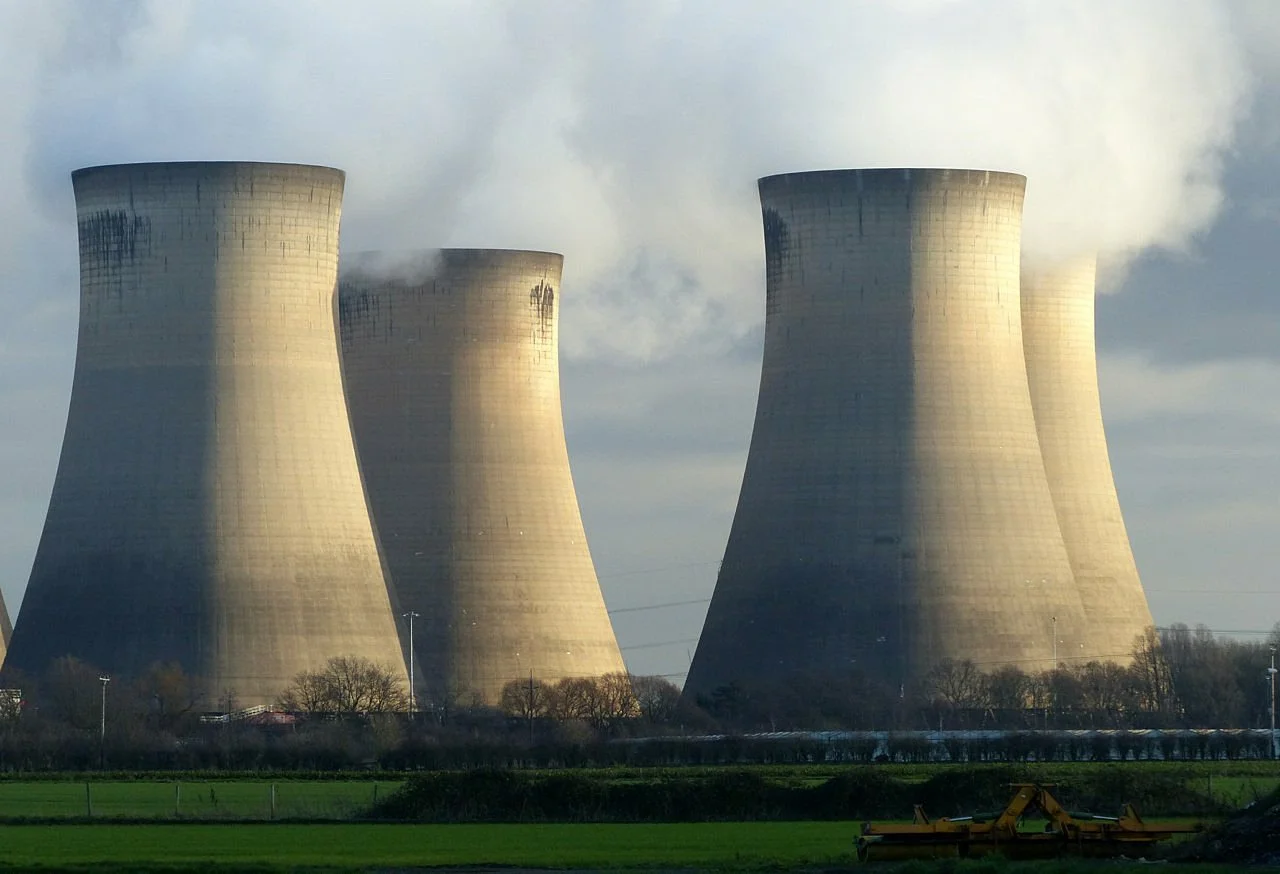
"Cooling towers, Drax Power Station" by Alan Murray-Rust is licensed under CC BY-SA 2.0.
Microsoft denies Mexico data center linked to water shortages, local illnesses, and power outages
By Jon Martindale
In central Mexico’s state of Querétaro, residents near a Microsoft data-center opened in 2024 complain of worsening water shortages, power outages, and health problems such as stomach bugs and even a cluster of hepatitis cases. Schools have closed temporarily because of water disruptions, locals say many need to pay for private water trucks, and a health-clinic operator reported that power outages once forced a patient transfer to a distant hospital.
Microsoft refutes any causal link, stating internal investigations found no evidence their facility disrupted utilities. Despite this, the episode raises broader questions about whether Mexico’s existing power grids and water supplies can sustain a rapid build-out of AI-driven data centers. Critics argue that the stress on water and electricity systems, especially in drought-prone or energy-stressed regions, could have real social costs even if firms deny responsibility. Additionally, reports suggest that data centers in Querétaro have sometimes relied on gas generators rather than grid electricity, a workaround that highlights infrastructural fragility and may carry increased environmental and social risks.
Power-Hungry Data Centres Could Threaten Michigan’s Electric Grid
By Tracy Samilton
In Michigan, environmental groups are warning that a surge in data-center proposals could overwhelm the state’s electric grid and derail its plans for clean energy. They argue that if enough of these resource-intensive facilities go ahead, utilities might need to build new natural-gas plants to meet demand, a move that would contradict the state’s net-zero carbon target for 2040 and risk raising residential electricity costs.
Activists note that the scale is unprecedented: they estimate that inquiries from data-center developers collectively amount to more than 20 gigawatts of potential new demand, roughly equal to Michigan’s current total electricity usage. They also point out that data centers consume lots of water, which could stress local aquifers, yet very few project proposals currently account for that in long-term utility planning. Local pushback has begun: communities have rallied and called for public hearings so people can influence how future energy and water planning accounts for large new data-center demand. The debate highlights a deeper tension: the promise of tech investment versus environmental sustainability and community welfare.
“Dry Land for Thirsty Data”: The Hidden Cost of Data-Centre Expansion
By Pablo Jiménez Arandia
The global boom in data and AI infrastructure, including “hyperscale” data centers, is driving unsustainable water and energy use across the globe. The core issue is that many data centers rely on water-based cooling systems (evaporative or adiabatic), consuming vast volumes of freshwater to prevent server overheating, often in regions already facing water stress. Because only a small percentage of Earth’s water is accessible freshwater, the expansion of water-hungry infrastructure in water-scarce areas threatens to deplete local aquifers and reduce freshwater availability for households, agriculture, and ecosystems. Even though some operators promise to recycle water or use closed-loop cooling, experts warn that such claims often rely on inconsistent metrics, limited audits, or assumptions about replenishment that may not hold in stressed basins.
What’s needed is stricter, location-based accountability, transparent reporting of water usage, and independent oversight: sustainability promises from tech companies must be backed by real, context-specific water management and regulation if environmental and social harms are to be prevented.
Project Nimbus — What It Is and Why Google Workers Are Protesting
Al Jazeera
Project Nimbus is a $1.2 billion cloud-computing and AI-services contract awarded in 2021 to Amazon Web Services (AWS) and Google by the government of Israel. The deal commits the two companies to supply a comprehensive “cloud solution” to Israeli government agencies, including defence and security services, with no option to refuse service to any particular branch.
Since the deal became public, hundreds of employees at Google and AWS have expressed deep ethical concerns over the possibility that the infrastructure could facilitate surveillance, advanced targeting or other military operations, particularly in the context of Israel’s conflict in Gaza. In protest, staff have staged sit-ins at offices in New York, California and elsewhere under the banner No Tech for Apartheid. Those demonstrations have led to the dismissal of at least 50 employees, including 28 in a single round of firings in April 2024. Supporters of the contract argue it serves purely civilian government functions — health, education, transportation — and deny it supports military or classified workloads. Google says Nimbus does not provide services directly to weapons systems or intelligence tools. Yet internal documents and statements from Israeli defence-industry officials indicate that the military has been deeply involved in the project’s design and implementation, calling into question the “non-military” framing.
For many tech-company workers and critics, Project Nimbus represents a troubling example of how commercial cloud infrastructures can be repurposed to support state violence — sparking urgent discussions about corporate responsibility, ethics, and human rights in the age of AI.
Myanmar: Rare-earth Mining Boom and Environmental Damage
By Michael Sullivan
In recent years, mining of heavy rare-earth elements in Kachin State and other parts of Myanmar has surged dramatically, largely driven by demand from global markets and by companies seeking looser regulation. According to a July 2025 investigation, unregulated mining operations, many backed by foreign investors, have proliferated since 2021, coinciding with the country’s political turmoil.
The mining often uses a method called in-situ leaching: chemicals are injected into the ground to extract rare earths, which are then collected downstream. This process frequently leads to serious and widespread environmental damage: deforestation, soil degradation, and contamination of rivers with toxic metals. Locals report water turning red or muddy, rivers becoming contaminated, and fish kills, affecting not only wildlife but also human communities that rely on rivers for drinking, fishing, irrigation and other livelihoods. Health risks are also significant. Exposure to contaminated water carries potential long-term consequences such as kidney, liver, bladder and lung illnesses, due to heavy metals and toxins often associated with rare-earth extraction. Meanwhile, many of the mining operations are reportedly unlicensed or operating under opaque arrangements with armed groups and militias — a byproduct of Myanmar’s prolonged civil conflict — which further limits accountability.
This boom is a grim counterpoint to narratives of “green technology” progress: the rare earths powering electric vehicles, wind turbines and electronics are being harvested at great human and environmental cost, from communities far removed from the profits and far exposed to the hazards.
Mumbai Data Centers & Coal: When “Cloud Growth” Means Dirty Air
By Luke Barratt, Atika Rehman and Sushmita
In the metropolitan region of Mumbai, a recent investigation reveals how the rapid spread of data centers, especially those operated by Amazon, is locking the city into continued reliance on coal power, exacerbating air pollution, public health crises, and social inequality. Residents in districts like Mahul, already burdened by industrial pollution, describe daily life as “toxic.” Many report serious illnesses — from respiratory diseases to cancer — which they believe are connected to the polluted air and heavy industry surrounding them.
Leaked internal data show that Amazon alone operated 16 data-center “availability zones” in Mumbai in 2023, consuming over 624,000 MWh of electricity that year: enough to power hundreds of thousands of homes. As a result, authorities reversed plans to retire two ageing coal-fired power plants in 2023, citing data-center demand as the driving reason. This decision kept polluting infrastructure alive and delayed cleaner energy transitions. Moreover, to avoid strain on the unstable grid, many data centers rely on diesel generators as backup power, which further worsens local air quality. According to environmental experts cited in the investigation, emissions from these generators, along with coal plants, contribute heavily to toxic particulate matter (PM2.5), significantly deteriorating community health.
This is a sharp illustration of how the global tech/AI boom can externally shift the pollution burden to marginalized communities: as Mumbai pushes to become a “data hub,” those living near the infrastructure pay the price with polluted air, degrading health and limited agency.

"Mumbai at dawn" by Tawheed Manzoor is licensed under CC BY 2.0.
Germany’s Data-Centre Boom: Pushing the Power Grid to Its Limits
By Sarah-Indra Jungblut
In Europe’s largest economy, Germany, the expansion of data centers, particularly in AI and cloud computing, is starting to strain energy infrastructure and raise concerns about environmental sustainability. According to a November 2025 analysis, Germany already hosts around 490 data centers, with more than 100 located in the Frankfurt region alone, making it one of the densest clusters globally. As data-center capacity has more than doubled since 2010, electricity consumption attributed to data infrastructure has risen sharply. In 2024, centers and IT installations accounted for around 4% of Germany’s total gross power consumption, a share expected to climb towards 10% by 2037 if current trends continue.
The concentration of data centers in hotspots like Frankfurt is already placing heavy demand on the local grid: in some areas these facilities consume up to 40% of the city’s electricity — a figure that challenges both energy supply stability and infrastructure planning. Experts warn that unless expansion is carefully managed, the growth of data-center infrastructure could undermine the country’s long-term goals under the broader energy transition (the Energiewende), which aims to shift power generation toward renewables and phase out coal and nuclear energy. Public sentiment reflects this tension: recent surveys show many Germans support data-center expansion only if the associated energy demand can be met with genuinely renewable sources. Three in five respondents said new centers should only be approved if renewable-capacity growth accompanies them. The data-center boom could jeopardise environmental objectives and grid resilience unless policymakers, operators and regulators prioritise sustainable energy planning and transparent impact assessments.
Our Observations
We have observed a thread that connects a few of the cases gathered this month: narratives of progress are often present where AI is concerned, but the progress comes at a high price. Lithium mining in Zimbabwe is being branded as an effort towards economic and social development; meanwhile, the unwanted consequences of this development give more cause for concern than support. A wood-powered data center is being opened in the UK under the banner of sustainability and renewable energy, while the fine points of what it means to burn wood for energy are ignored. Rare-earth is being extracted in Myanmar under the banner of the green transition, while on-the-ground pollution levels and conflict are telling a different story.
AI development is often framed as beneficial to both global and local communities — whether it is through job creation, efficiency, or an injection of cash. Within these narratives, the drawbacks — energy and water strain, community displacement, and pollution, among others — are minimised. Collating these cases and documenting the impacts that AI systems are having throughout the supply chain is our effort to show how systemic and widespread such impacts are and how critical it is to find sustainable solutions for AI development that allow planetary communities to thrive.
Transparency also remains of key importance: reports of companies obscuring the details of their plans come in from the US, India, Germany, and Mexico, where communities are worried that the data centers being built near them will use more land, water, and electricity than previously declared, and that they will leave pollution in their wake and put renewable energy targets in jeopardy, without providing the promised job creation and economic incentives. It is clear that these structures have huge impacts on their surrounding communities, and that those communities have the right to be informed about how their land is being used and involved in the decision-making process.
We want to emphasise that the Observatory is a collective repository, and that we are always looking for submissions of case studies. This is a community-led, adaptive data collection effort. If you come across case studies similar to these, please submit them here!