
Imaginaries of the Future
A work-in-progress fiction reading list at the nexus of AI, climate emergencies, and technological dystopia
Many scholars have talked about the importance of imagination as a tool for resistance, whether it is imagination of possible alternatives for our ways of life, or possible futures for humanity and Earth, positive or negative. Personally, I sometimes find it difficult to become emotionally invested in an environmental or even a political development unless I sit down to imagine, by thinking or by reading, what its impact is or will be on people, ecosystems, and our planet in its plurality. Fiction really helps me in this effort. I have collected here a few of my personal recommendations for novels and stories with really stark imaginations that have impressed onto my brain what the future might look like, which helps me want to shape it.
I’ve tried to stay away from the obvious classics, which I’m still making my way through, but tried to highlight a few more contemporary and perhaps lesser known novels that impacted me strongly all the same.
Imaginaries of Climate Disaster
I suffer from a fair amount of climate anxiety, and it probably isn’t so advisable for me to read many musings of just how inhospitable our planet could become. Regardless, I have read these books, and they’ve really helped me visualise the challenges we will most likely face in the near future. Discourses of climate emergencies often confine themselves to abstract concepts, such as temperatures and sea levels rising. Injecting an image of what that would mean for the characters in these books is really helpful to feel the need to act in service of a better future.
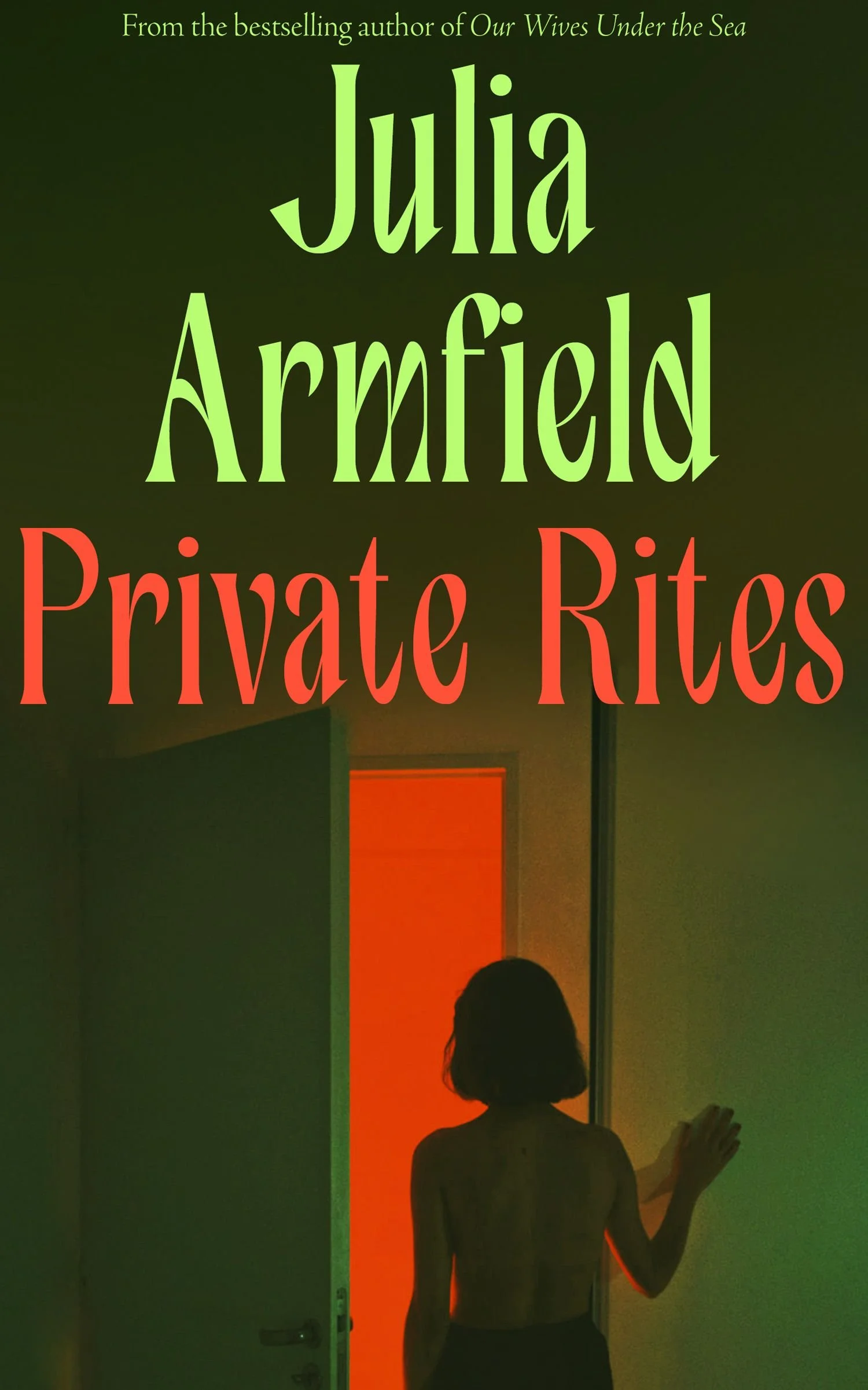
Private Rites by Julia Armfield
I live in London, and although London is quite famous for being a rainy place, it’s not currently always raining. What would it be like if it was, literally, always raining? Julia Armfield imagines a future London climate where rain never ceases (or ceases for 10 minutes once a year or so), and the flooding has crippled the already precarious infrastructure, so that people have to live on the upper floors of semi-sunken high-rises and travel to work by boat, as if in a suspended, mould-infested Venice.
The book explores religion, cults, class, grief, and sisterhood in a climate-uncertain world, and it’s perhaps the best example of climate emergency fiction I have ever read.
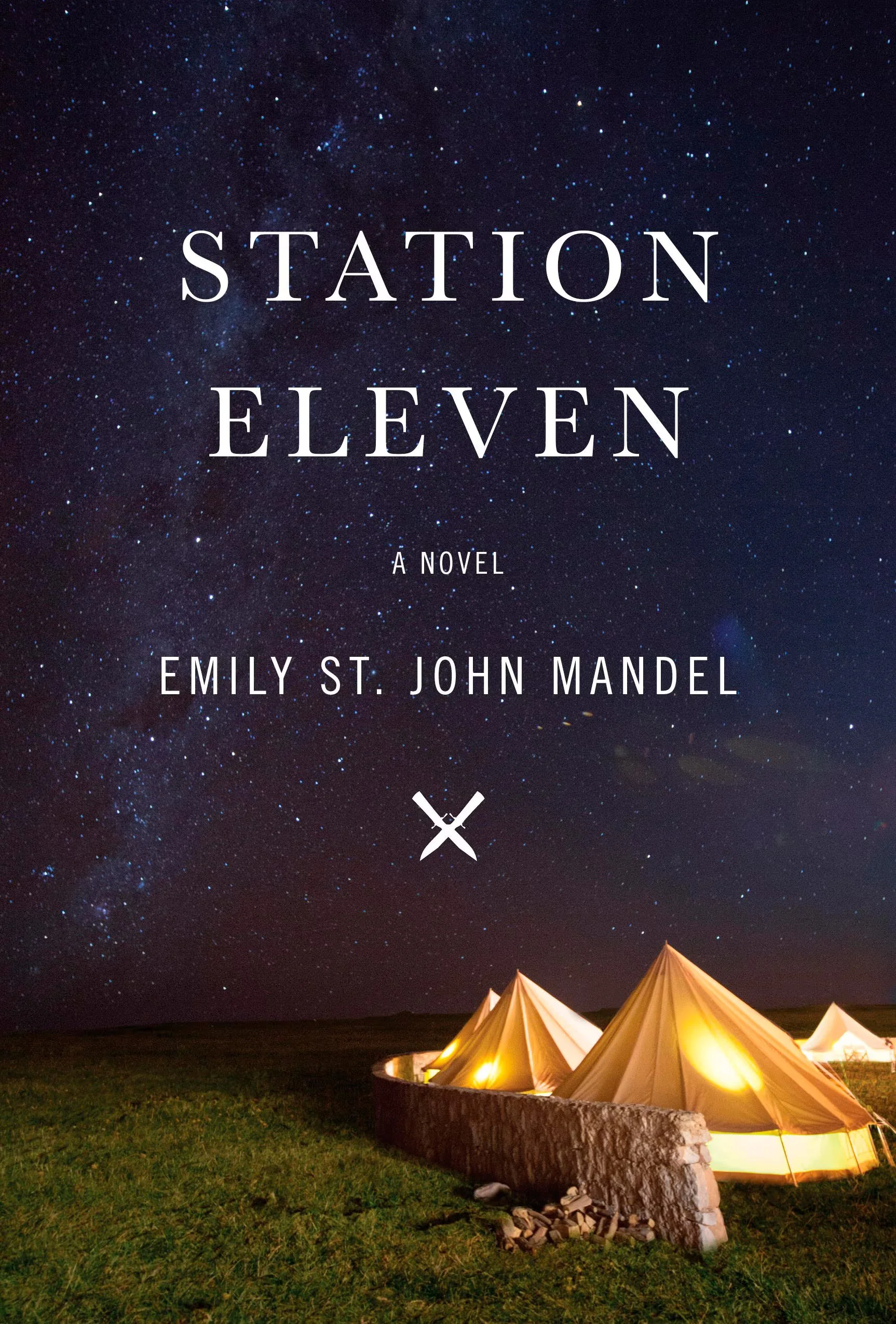
Station Eleven by Emily St. John Mandel
Emily St. John Mandel is one of the most talented writers of our time, and you might have heard of Station Eleven because it was made into a TV show in 2021. It takes place in a post-apocalyptic world precipitated by a pandemic, where only approximately 2% of the human population has survived, and examines how the lives of a handful people who knew each other before the collapse entangle again after 20 years. The book has flashbacks to the start of the crisis, but it mostly follows the character of Kirsten, who was 9 at the time the pandemic started, and is now an actress in a travelling troupe that goes from town to town and performs plays and music to preserve some of the old culture into the new society. In a world focused on survival, with no electricity and very little comfort, the Travelling Symphony is a small effort to keep art alive. Although the apocalypse evoked by St. John Mandel is not strictly related to a climate disaster, its sprawling empty landscape and its description of post-apocalyptic survival are extremely vivid and will stay with me for a long time.
The Stone Gods by Jeanette Winterson
Jeanette Winterson is, in my opinion, the author who positioned herself at the nexus of technological development and climate emergency, especially in this book (which is one of my favourites of all time). Winterson evokes a climate-disaster-strewn world where enormous white screens have been laid across the poles to replace the reflective effect of the melted polar ice caps, to reduce the heat the Earth would have to absorb without them. This is a world where writing has been replaced by symbols, where people fix themselves to the age they want to be, forever, and where Billie is training a new generation of AI that will help a crew travel to a pristine new planet on which to finally relocate those who can afford it. Winterson’s description of the planet untouched by human hands, like ours 65 million years ago, is one of the best I have ever read, and I will never not be re-reading this book on a 5-year loop. ALSO it traces the theme of colonialism and the concept of terra nullius AND it discusses isolationist notions of resistance which we’ll see revisited in The Dream Hotel (see below).
Tracing Technology’s Trajectory into the Future
A second category of books that really appeals to me - and that I think our audience might be interested in - is novels and stories that look at the history of technology and technological imaginaries, and how they intersect with the present and future. It might be a slightly more elusive category than the other two in this blog, but it feels important to me to talk about the parallels between the past and the future, how our past will always shape the development of our technology, and how we can learn from the past even when it feels like we’re in a brand new territory.
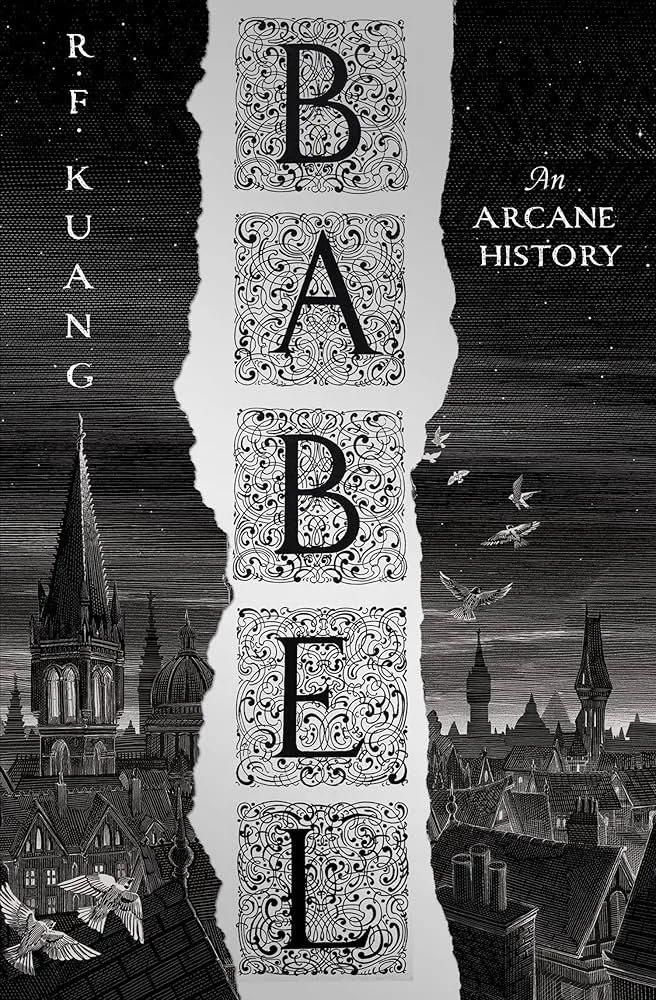
Babel by RF Kuang
Those of you who will have already read Babel might be surprised to see it in this list, as a dark academia historical urban fantasy novel, BUT I think Babel is extremely relevant to these discussions, because it’s a giant allegory for colonialism, and it’s not shy about it. In fact, I didn’t like it very much, because it so plainly hits you over the head with it (but many people have liked it, so here we are). In 19th century Oxford, Robin Swift, a Chinese immigrant, is admitted to the prestigious Royal Institute of Translation at Oxford University, where he becomes an academic prodigy, until he realises that the technology the Institute is using on behalf of the government is an instrument of exploitation of other people’s resources for Britain’s gain. And when Britain declares war on China over silver and opium, Robin must decide whether he will be part of the resistance efforts or be complacent and pursue his academic career. RF Kuang’s world is, as always, extremely immersive, and her critique of the use of technology for profit and exploitation is very effective.
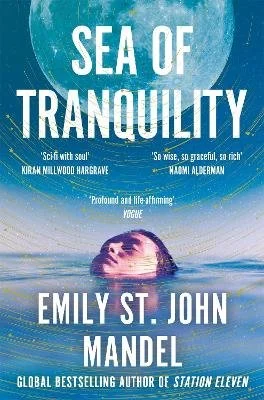
Sea of Tranquility by Emily St. John Mandel
When Emily St. John Mandel published Station Eleven, it was 2014, and barely 6 years later, the world was plunged into a global pandemic, not as deadly as the one described in her book, but a devastating one nonetheless. Sea of Tranquility is an extraordinary reflection on the experience of predicting a pandemic, as embodied by the character of Olive, an author on a book tour in the 23rd century. Her tour is on Earth, but she lives on the Second Moon Colony. Her life becomes entangled through time between early 20th century British Columbia (in the throes of settler colonialism), and the 25th century, where her colony is now in disrepair, and humans have spread out much further than the Moon. What I find most interesting in this novel is the description of the run-down Second Moon Colony, because it feels like such a new kind of science fiction, where technology is not sparkly and gleaming but old, faulty, subject to the passage of time and to politics that leave the most vulnerable and economically disadvantaged behind.

Frankissstein by Jeanette Winterson
Do you want to read a novel that weaves in parallel the trip to Geneva in which Lord Byron, John Polidori, Percy and Mary Shelley and her step-sister Claire Clairmont dared each other to write ghost stories - Mary Shelley wrote Frankenstein - and a futuristic retelling in which Doctor Ry Shelley supplies scientist Victor Stein with body parts to bring a body back to life, with the help of sexbot magnate Ron Lord? If so, then this is the book for you. Winterson updates Frankenstein to the present day, in a world where artificial bodies and intelligences can be and are created, and explores how those new intelligences will be shaped by our patriarchal society. While the focus of this book is decidedly niche, it is a thoughtful exploration of the future of an AI shaped by a biased world. Its extremely effective narrative devices will make you think long and hard about the past, present, and future.
Techno Dystopia
What would a reading list about AI and planetary justice be without some good old fashioned technology-based dystopia? This is where your Do Androids Dream of Electric Sheep? and 2001: A Space Odyssey would usually be, and I’m not not telling you to read those books. It’s just that everyone already knows about them. If you want something new and fresh, then these might be just the scratch to satisfy your techno dystopia itch.
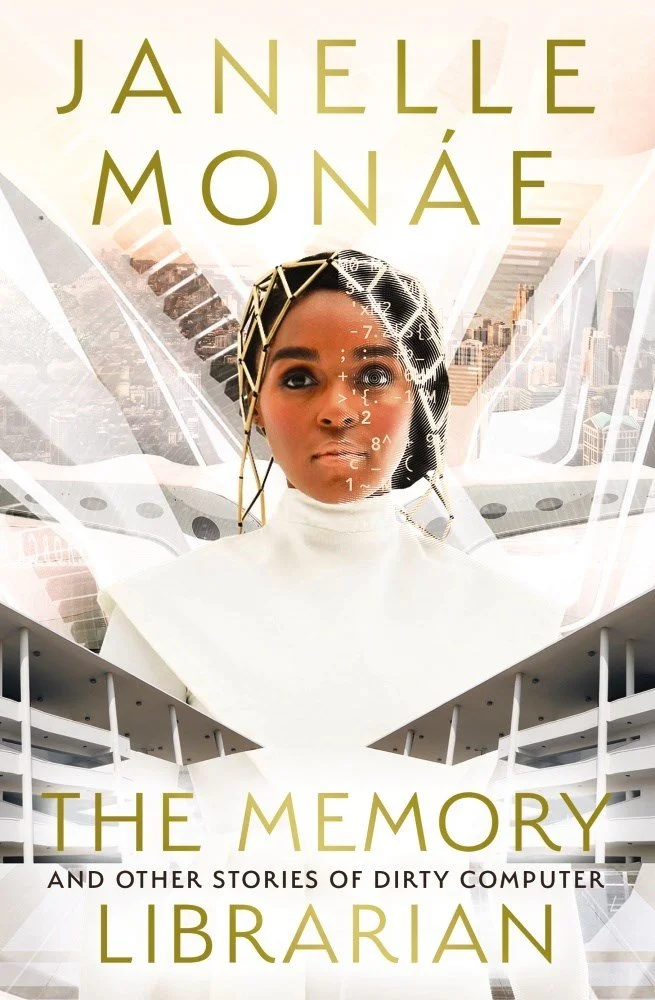
The Memory Librarian by Janelle Monáe
After releasing the album Dirty Computer in 2018, Janelle Monáe worked on this accompanying collection of short stories, in collaboration with writers Yohanca Delgado, Eve L. Ewing, Alaya Dawn Johnson, Danny Lore, and Sheree Renée Thomas. The stories are all set in the same universe as Dirty Computer, a universe in which memories are harvested from citizens, who have no right to keep them. In New Dawn (this dystopian version of the United States) people are classified as either dirty or clean, and anyone deemed a ‘dirty computer’ has to go through a cleansing process where they will forget their memories of everything they’ve done to deem them so. The hierarchy of New Dawn, headed by the Memory Librarians, believes that this will prevent the dirty computers from committing the same sins in the future. However, throughout the stories, the authors show us the loopholes that people are exploiting to get more freedom in this oppressive regime, until, at the end of the collection, a vision for the future full of hope and imagination dominates. This is consequently one of the lightest books on this list, where technology, magic, community and love come together to weave a complex network of power and resistance. The power of the imagination of this book is in showing the light at the end of the tunnel: resistance is always possible, and it is always important.
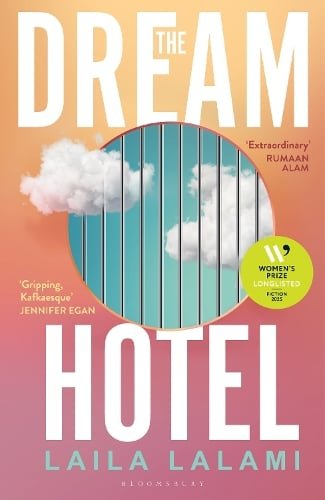
The Dream Hotel by Laila Lalami
Last but not at all least! Read this book! If you read nothing else on this list, read The Dream Hotel, please! Laila Lalami writes a dystopia set in the present day or very near future, where US citizens get confined to ‘crime prevention facilities’ run by for-profit companies whose interest is to keep inmates confined for as long as possible. Sara, the protagonist, has a brain implant that helped her sleep better at night to take better care of her newborn twins. However, the fine print of this implant explains that it collects the contents of her dreams and sells them to third parties - in this case the government - which runs an algorithm designed to identify people who might in the near future commit a crime. Lalami writes a complex character that is perfect to explore the harmful potentials of technological deployments that restrict civil liberties, the capitalist prison-industrial complex, and how technology engendered in a racist and Islamophobic society stands to reify its own prejudices. I had to avoid reading this book at night because it was making me too stressed to sleep, so 10/10, an excellent book.
Although reading is slow work, I’m already planning to read more books covering these themes, and I will hopefully be able to add to this list in the future. Please let me know if you read any of these, or if you have any suggestions for future books! If you are planning to read any of these books, please consider borrowing them from your local library or supporting your local independent bookshop.