
New Cases on the Observatory: August Round Up
Our Observatory of Planetary Justice Impacts of AI aims to make visible the impacts of the AI supply chain on human and more-than-human communities on the planet. In this blog, we’re rounding up the latest cases added to the Observatory, highlighting how grassroots resistance is shaping the data center landscape in the US and Canada.
A Few Highlights from the Latest Cases
Data Center Planned Near Mar-a-Lago Risks Toxic Algae Blooms
By Sara Sneath
About 16 miles (26km) west of the Mar-a-Lago estate on President Donald J Trump Highway, near the northern edge of the Florida Everglades, developers have proposed a hyperscale datacenter on a 202-acre (82-hectare) parcel of land surrounded by water. Local environmentalists warn that the proposed 600MW datacenter in western Palm Beach county could damage the wetlands, which the federal government and the state of Florida have spent a combined $6bn to restore after decades of drainage and development. One concern is that the datacenter could exacerbate an existing issue of toxic bacterial blooms in a water system which has already been stressed by drought, fertilizer runoff and warm water temperatures. Reinaldo Diaz grew up in Palm Beach county and founded Lake Worth Waterkeeper, a non-profit dedicated to protecting the watershed. He said waste heat from the proposed datacenter, called Project Tango, could increase the water temperatures in the surrounding watershed, putting the Florida Everglades further at risk of toxic bacterial blooms. Diaz’s environmental concerns, like many, are linked to the amount of electricity a 600MW datacenter could consume, enough to generate enormous amounts of heat. Based on US Energy Information estimates of residential electricity use, at peak capacity a 600MW datacenter could use as much power as half a million US homes. The homeowners association for the neighboring community of Arden, city of Westlake, town of Loxahatchee Groves, Everglades coalition, Palm Beach county classroom teachers association, the school board of Palm Beach county, a Florida representative and a Florida senator have all written letters of opposition to the Project Tango data center. Next month, Palm Beach county commissioners will vote on a moratorium against large-scale data centers. Several other counties in Florida have already adopted similar measures.
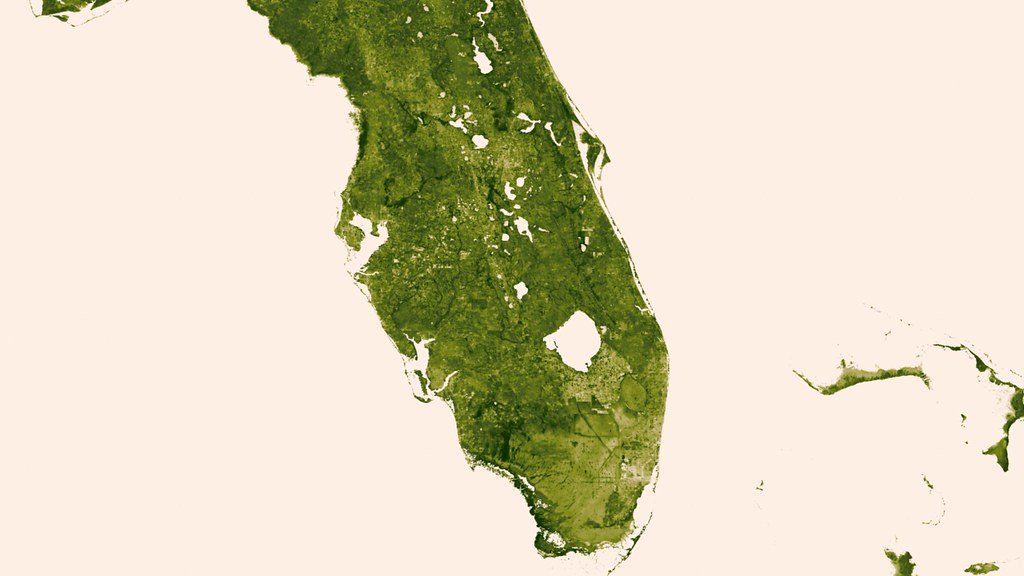
"Florida Everglades" by NASA Goddard Photo and Video is licensed under CC BY 2.0.
Maryland Data Center Protests Show A Blueprint For Resistance
By Nitish Pahwa
A data center campus was proposed for the small, majority-Black town of Landover, in a plan that encompassed five buildings, 87 acres, 820 megawatts of power—and little public awareness effort. The location of the proposed AI "tech park" is not exactly remote; the torn-down mall once served families who live in an apartment complex right next door, with a school, a hospital, and a childcare center nearby. Taylor Frazier McCollum, who lives in Landover, heard about the tech park from a neighbor in February 2025—and immediately grew concerned, having already seen reports about big data centers’ impacts in residential Georgia, from water use to noise pollution. She contacted her council reps, started a Change.org petition, and posted Facebook videos about the campus, warning that sizable data centers in other states had led to environmental pollution, costlier utility bills, and lower property values. McCollum wrote in her petition. “It’s imperative that the community has a voice in such significant changes.”
Proposed Meta Data Center In Alberta Draws Protests Over Water And Energy
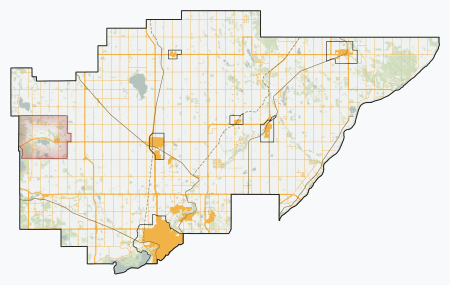
"0305 Sturgeon County, Alberta, Detailed" by awmcphee is marked with CC0 1.0.
By Fakiha Baig
In July, Alberta announced that the tech giant Meta is building a massive facility in Sturgeon County, north of Edmonton. Meta's facility is set to be online in the next two to three years. Alberta's government calls the more than one-gigawatt and $13-billion facility the largest AI data centre investment in Canadian history. Protesters said the community wasn't consulted on the Meta centre, and that the government hasn't been transparent about the others planned for the province. They also expressed concerns that Meta's operation will increase their water and utility bills and create noise because these facilities use a lot of electricity and water to both power and cool hardware. The government has launched a website describing what data centres are, how they will impact bills and the environmental impact assessments they are required to undergo before they are approved. "This website puts the facts about power, water and community impact in one place, so people can see for themselves how Alberta is responsibly developing AI data centres on our own terms," Technology Minister Nate Glubish said last week. Organizer Ben Baril said the government's reassurances on Meta and other data centres aren't enough. He said he worries about the impact their massive energy consumption will have on the environment. A recent United Nations University report says the environmental footprint of data centres globally already rivals some of the world's largest countries. "Citizens should have a say," Baril said. "If people are not in favour of it, then they just shouldn't be built."
New Amazon Data Center Might Become the Most Polluting Power Plant In The US
By Hiroko Tabuchi
In 2019, Amazon signed the Climate Pledge, aiming to help Earth's environmental health. In 2026, Amazon aims to set a record for the most air pollution emitted by a single power plant. The New York Times reported that the company is building a new natural-gas-burning power plant in Pecos County, Texas, for a huge AI data center project. The plant, if built as planned, would emit approximately 33 million tons of carbon dioxide into the atmosphere annually, making it among the largest emitters in the United States. The plan is actually trying to prevent possible resistance: project Horizon is deliberately isolated. The site sits in unincorporated Pecos County, buffered by vast ranchland, ensuring that mechanical operations remain inaudible from populated areas. Access comes via low-traffic roads off the highway. There is no nearby suburban sprawl; instead, it is development in the open desert. However, no such care has been taken to reduce the pollution impact: the project has prompted backlash among Texans and environmental groups. Kathryn Guerra, Campaign Director at corporate watchdog Public Citizen, says: "It's going to absolutely have a huge impact on the environment and on public health." Texas regulators have taken note. The state has paused approval of new data centre projects pending an audit of each facility's impact on the grid. Still, construction of the plant appears to be proceeding. As for Amazon's Climate Pledge, a spokesperson told the NYT that, simply put, things change over time.

Our Observations
Resistance to data centers is reaching a fever pitch, especially in the US and other Anglophone countries, and news outlets are reflecting this reality. As more and more research is published around the environmental impacts of data centers and AI more generally (which we have tracked in the Observatory here, here, and here — or just select “Earth” under the Regions filter), and communities report their struggles with pollution, blackouts, and access to water, more and more towns and cities are organising to delay or block data center projects, or at least to know more about the consequences for their environments.
Data centers seem to have become a new chapter for the environmental movement as a whole. While the 2010s were a very productive time for the fight against the climate crisis — from the Paris agreement to the Sustainable Development Goals to the IPCC Special Report on Global Warming — Covid-19 changed the landscape: as a new crisis spread across the planet, the climate took a backseat in policy agendas and public discourse.
As Covid slowly subsided, bringing the climate crisis back on the agenda wasn’t easy, and it took a long time. Based on our work at the Observatory, my impression is that AI became a great opportunity for the climate movement. I have reflected on how and why this might have happened, and the factors I think went into the rise of the anti-data center movement:
AI has become the next obsession: everyone is talking about it in both the private and public sector. News outlets report on it constantly. Moreover, narratives of AI encompass both benefits and risks — utopias and dystopias — making it easier to be critical of certain aspects of AI.
AI comes with a significant environmental toll, which this Observatory and AIPJ as a whole have been researching and reporting on. Its usage of water in particular, and the corresponding difficulty for local communities to access water, struck a nerve early on in the discourses of the environmental impact of AI and its supply chain. The narrative has now expanded to include other impacts as well: carbon emissions, land usage, habitat degradation, pollution and noise pollution, among others. Have a look at our Observatory page to see our extensive database.
Data centers have become the focal point of the discourse around the environmental impacts of AI, and it’s not totally clear why. We have seen at the Observatory that the impacts of the AI supply chain are not easy to track: examining the impact of the extraction of raw materials, for example, can be tricky, as the same materials can serve many different industries. The same is true for virtually every other stage of the supply chain. My hypothesis is that:
While other stages of the supply chain are physically located in a variety of places across the planet — from the extraction of copper in Zambia, to the manufacturing of semiconductors in Taiwan, to the disposal of hardware in Thailand — data centers are primarily located in the US, the most economically and culturally influential country on the planet. This proximity to the Global Minority means that the impacts are more visible in the Western public discourse, which has significant influence on global public discourses, and that the impacted communities know how to make their voice heard on the national and planetary stage. It’s impossible to know, but I wonder if data centers would have been so discussed if they’d been mostly based anywhere else.
Hyperscale data centers are the only part of the AI supply chain that uniquely serves AI models (except for the manufacturing of specialised chips, which mostly happens in East Asia). Hyperscale data centers are almost entirely feeding into the training and deployment of AI models, and thus they are easily identifiable as part of the AI supply chain — the environmental impacts of hyperscale data centers are most likely environmental impacts of AI.
The location of data centers in the US also means that communities are very familiar with the companies that are building and using them, as well as their CEOs. X, Meta, Amazon, and Google, which overwhelmingly get reported as the operators or clients of the data centers, are very recognizable companies, and thus easily identifiable as responsible for these impacts. They are also more readily covered in the news.
It also didn’t help that tech CEOs have been getting progressively involved in right wing politics, with Elon Musk joining the Trump administration, and Mark Zuckerberg entering the MAGA movement. Trump had been the one to withdraw the US from the Paris agreement in the first place of course, and the climate has never been at the top of his agenda. This shift to the right on the part of tech entrepreneurs has not endeared them to environmentalists, to say the least.
As I see it — from the work we have done collecting media reports of the planetary justice impacts of the AI supply chain — AI’s popularity as a topic of discourse, its environmental impacts, the location of data centers in the US, and the right-wing, anti-environmental leaning of the heads of companies leading those data center developments, all converged as factors to bring the environmental impacts of data centers and the climate crisis more front and center. This summer’s European heatwave and drought also helped bring the crisis into focus.
The resistance movement is asking questions that are worth considering: we have been able to live very well without AI until now. Do we really need it, when we have very few resources to go around? When using it is raising the Earth’s temperature even more? And even if we do need AI, it is already running on functioning AI data centers — why do we need so many more? Isn’t the infrastructure we already have enough? Moreover, could we reduce our reliance on AI in order to reduce the impacts of that infrastructure? For example, we could reduce incentives to develop and run generative AI, big AI, or AGI, and instead focus on small scale models and frugal AI, or models with purposes that serve medical and scientific development. I could argue that we already have the infrastructure we need for those models, and that there is no need at this moment for further hyperscale AI data centers.
More and more resources to fight data centers and the AI supply chain in your community are being published. An interesting tool we’ve found is r00ts.xyz, a browser extension that can tell you which data centers are hosting each website you are visiting. A core part of my motivation at AIPJ is recognising the part I play in consuming the products of big tech companies, which holds me accountable to the damage such companies are causing. I recommend using this tool, it will show you the part you play too. Individual behavioural change is not going to be enough to enact systemic change: corporations and governments need to be held accountable for their actions. Still, we can use these tools to motivate ourselves to advocate for and get involved in systemic action and resistance.
If you are interested in the work of the Observatory, check out our 2025-2026 Report, where we analysed all the data we collected in our first year of running it, and highlight some interesting cases from around the world.
The Observatory is a bottom-up research initiative, collecting cases of planetary justice impacts of AI throughout its supply chain. You can submit cases here.