
New Cases on the Observatory: September Round Up
Our Observatory of Planetary Justice Impacts of AI aims to make visible the impacts of the AI supply chain on human and more-than-human communities on the planet. In this blog, we’re rounding up some of the latest cases added to the Observatory over the month of September.
Back in July, I was struck by a report by Friends of the Earth that showed data centre growth had cost Irish households nearly €715 million in additional electricity costs between 2015 and 2023. That case was not an outlier. In the months since, a wave of new research has confirmed that increased energy costs are becoming a global norm. This piece is intended as a follow-up to the FoE report. The following three cases highlight that data centre demand is outstripping energy supply and that ordinary people are paying the difference.
A Few Highlights from the Latest Cases
UNECE Warns Data Centres Are Outpacing the Grids Meant to Power Them
By United Nations Economic Commission for Europe
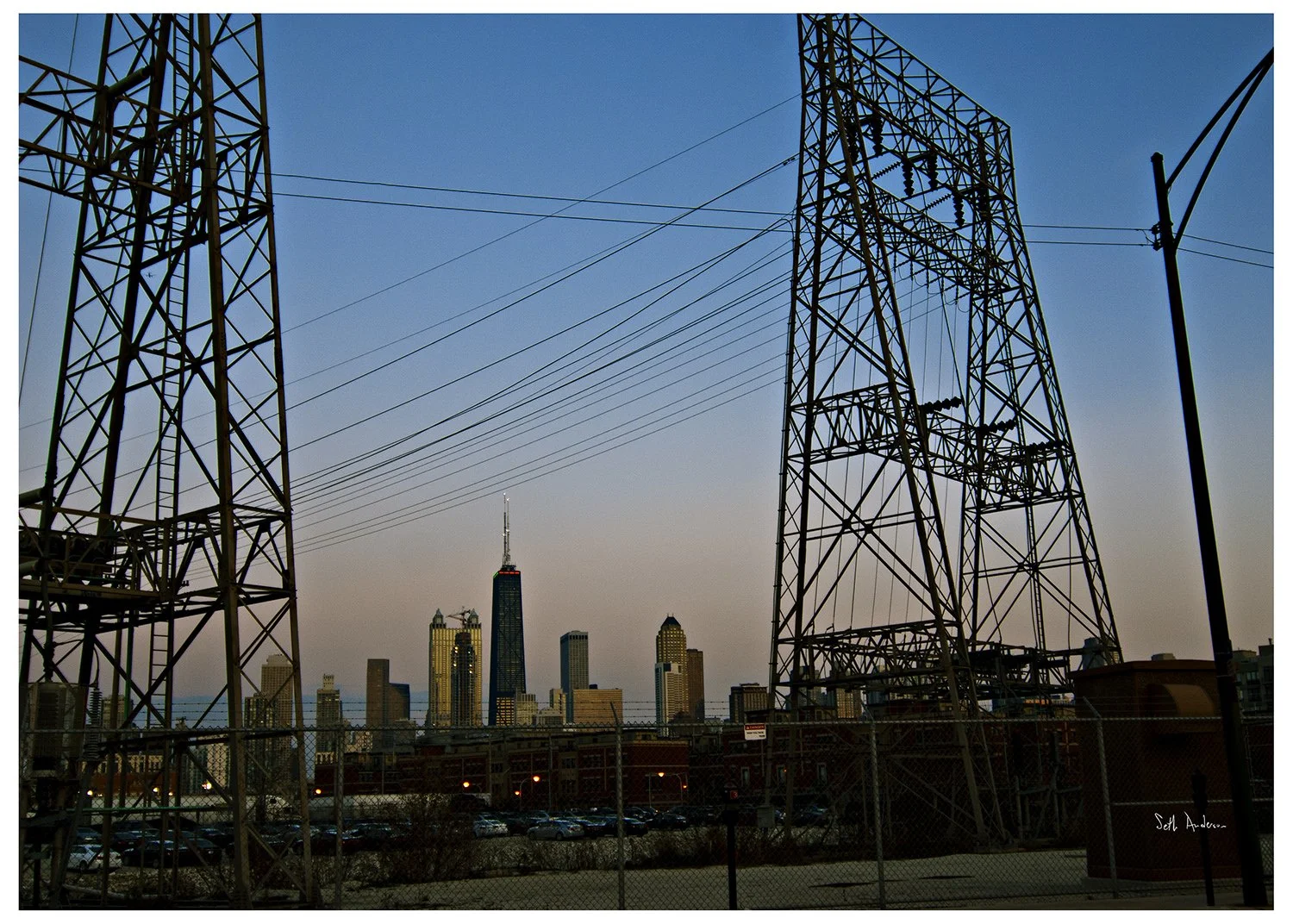
A new paper prepared by the UN Economic Commission for Europe (UNECE) for their Committee on Sustainable Energy warns that the rapid expansion of AI data centres is outpacing the electricity infrastructure needed to support them, threatening the reliability and resilience of energy systems worldwide. Global electricity consumption from data centres is projected to increase from approximately 485 TWh in 2025 to 950 TWh by 2030, equivalent to 3% of global demand, while capital expenditure on data centres is set to rise from roughly US$800 billion per year in 2026 to $1.8 trillion per year in 2050. The core problem is a mismatch in pace: large-load facilities can be deployed within two to five years, but transmission networks often take more than a decade to build out due to planning and permitting processes. The allocation of costs for these grid expansions is also unresolved. Large-load growth requires substantial infrastructure spending, and governance frameworks for how to fairly allocate these costs are lacking. Without these frameworks, the report warns, “countries risk using scarce electricity to generate externally captured AI value while absorbing infrastructure costs and labour-market impacts domestically.
“Electricity is a Bitter Herb” by Seth Anderson is licensed under CC BY-NC-SA 2.0
Data Centres Are Raising Electricity Prices — and Households Pay More Than Anyone Else
By Cameron Scalera, Valentina Bosetti, and Filippo Pecci
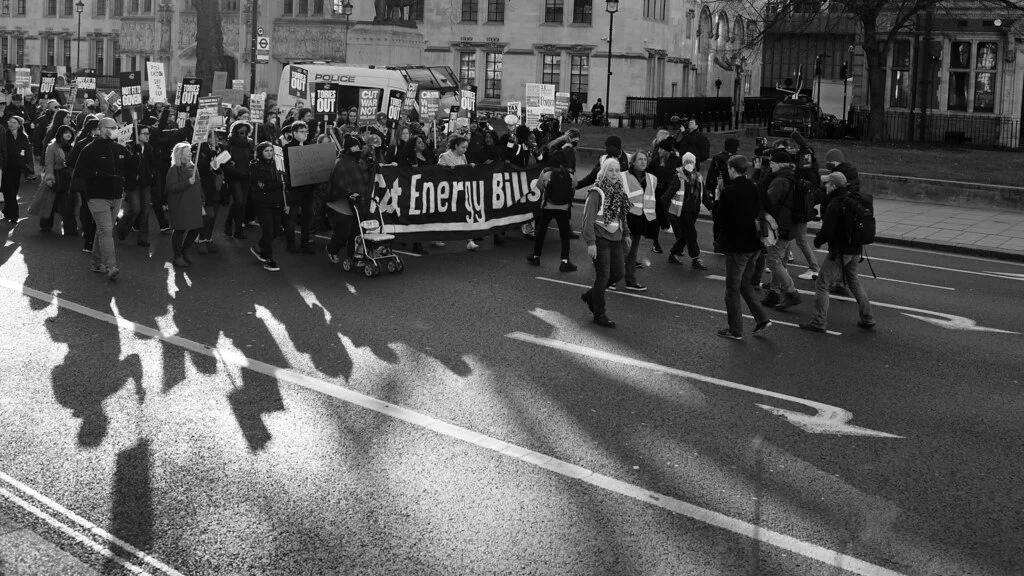
A new CEPR study offers evidence that data centres are driving up the price ordinary people pay for power. Analysing 1,200 US utility territories and 2,700 data centres between 2015 and 2024, the researchers found that an additional data centre increases average residential electricity prices by 0.182 cents/kWh, and a single average hyperscale facility raises prices by roughly 4%. Crucially, households absorb a disproportionate share of the cost: the price increase for residential customers is 30–40% larger in absolute terms than for industrial and commercial customers, on top of already higher average rates. This is largely due to the distribution infrastructure costs associated with new facilities, which increase peak demand on already-strained grids. The study estimates these infrastructure costs at roughly $11.6 million per facility. Meanwhile, household energy prices remained stable in territories served by nonprofit, cooperative, or municipal utilities, which rely more heavily on fixed prices and are therefore less vulnerable to volatile market conditions.
“Cut Energy Bills” by Alisdare Hickson is licensed under CC BY-SA 2.0.

“Farm buildings near St. Albert” by WinterforceMedia is licensed under Creative Commons.
By David Pickup
New independent analysis by the Pembina Institute shows how policy choices can turn data centre development into costs for households. The researchers project that Meta's new hyperscale data centre in Sturgeon County—which we wrote about in our August round-up—could add between $270 and $460 a year to Albertans' electricity bills in the next five years, amounting to a 15-25% increase even as the project delivers a modest 6% reduction on the transmission portion of bills. Alberta's "Bring Your Own Generation" rule lets data centres connect to the grid before their own power supply comes online, putting pressure on the grid and raising costs for ratepayers until new infrastructure is built. The province has also mandated that data centres must rely exclusively on natural gas for new generation, barring cheaper and more stable renewable energy and locking in higher emissions and prices simultaneously. This approach is part of Alberta Premier Danielle Smith’s wider anti-renewables energy policy, which is driving some of the highest and most volatile electricity rates in Canada.
Our Observations
Planetary justice frameworks argue that rising household energy costs are not an unfortunate side effect of technological development, but a direct symptom of failing to manage resource distribution within ecological limits. The UNECE report makes clear that global energy demand is accelerating due to systemic shifts: intensified resource extraction across AI's supply chain, and the geographically concentrated growth of AI data centres, whose consumption is set to nearly double in five years. To accommodate this spike, alongside the grid stabilization demands of worsening extreme weather, utilities have to pour billions into modernizing infrastructure that was not designed for this scale or speed of demand.
This is where planetary justice reveals a deep distributive imbalance: while new data centres are consuming much of this new power capacity, the fixed costs of upgrading the grid to serve them are being socialized onto the ratepayers connected to it. The CEPR study highlights that households absorb a larger share of the price increase than industrial users, leaving regular ratepayers left to indirectly bear the costs of digital infrastructure. The case of Alberta's Meta data centre underscores that this imbalance is not an accident of market dynamics but an active policy choice: Alberta Premier Danielle Smith is structuring the rules so that corporate demand is served first and cost-absorption is pushed downward onto ratepayers.
Planetary justice helps us connect household affordability to the wider, planetary scale of the energy crisis. As the climate crisis intensifies and planetary boundaries are pushed beyond their critical thresholds, extreme weather events are driving demand spikes for household heating and cooling—essential, survival-level energy use. With new AI data centres competing for energy on already overstressed grids, the cost of supplying that essential energy is skyrocketing. When pricing models rely strictly on market mechanics, without taking fair cost allocation into account, the additional financial burden can force lower-income households into an impossible "heat or eat" dilemma.
These new cases suggest that the AI infrastructure boom is being financed through the electricity bills of people who never asked for a data centre next door. Meanwhile, the profits are privatized amongst a handful of tech companies. A planetary justice lens makes clear that this is not an inevitable consequence of technological development but a predictable outcome of governance choices. Governments and regulators need to put in place cost allocation and siting frameworks to ensure that the costs and risks of these projects are fairly distributed amongst developers, energy providers, and consumers. Until then, regular ratepayers risk being used as shock absorbers for corporate AI energy demand.
If you are interested in the work of the Observatory, check out our 2025-2026 Report, where we analysed all the data we collected in our first year of running it, and highlight some interesting cases from around the world.
The Observatory is a bottom-up research initiative, collecting cases of planetary justice impacts of AI throughout its supply chain. You can submit cases here.


