
New Cases on the Observatory: January Roundup
The AI models that we use in our day-to-day life are the products of a vast and complex supply chain, the planetary impacts of which we aim to uncover and make visible. In our Observatory of Planetary Justice Impacts of AI, we aim to bear witness to the impacts of the AI supply chain, so as to to spread information, share resources, and build a catalogue of real-world examples.
Latest Cases
In this blog, we highlight four of the ten latest additions to the Observatory, which highlight some power dynamics reminiscent of coloniality. In collecting these cases, we are looking at the bigger picture and how these cases might be understood through thinking about epistemic justice and neocolonial relations.
Indigenous Protester in Indonesia Tells French Mining Giant: “Stop The Mining Or My People Will Die”
By Survival International
Extensive nickel mining by French mining giant Eramet is destroying the Indonesian rainforest and threatening the lives of the uncontacted Hongana Manyawa people of Halmahera Island. Eramet operates the nickel mine, which is the largest in the world, on Hongana Manyawa land as part of the Indonesian government’s efforts to produce nickel for EV batteries. Weda Bay Nickel, a company jointly owned by Eramet and China’s Tsingshan Holding Group, has the largest mining concession on the island. More than three-quarters of Weda Bay’s concession overlaps with the territories of Indigenous Hongana Manyawa. Eramet have publicly denied the existence of uncontacted Hongana Manyawa people within their mining concession, despite leaked reports commissioned by the company revealing awareness of their presence since 2013.
In November, members of the Hongana Manyawa people travelled to France to protest against the mine outside of Eramet’s headquarters. Ngigoro, a member of the Hongana Manyawa who was born uncontacted, said, “If they don’t stop the mining, my uncontacted relatives will die.” Survival International Director Caroline Pearce reiterated: “to the Indigenous Hongana Manyawa, [the mine] is the destruction of their forest home, and a death sentence for those who are uncontacted.”
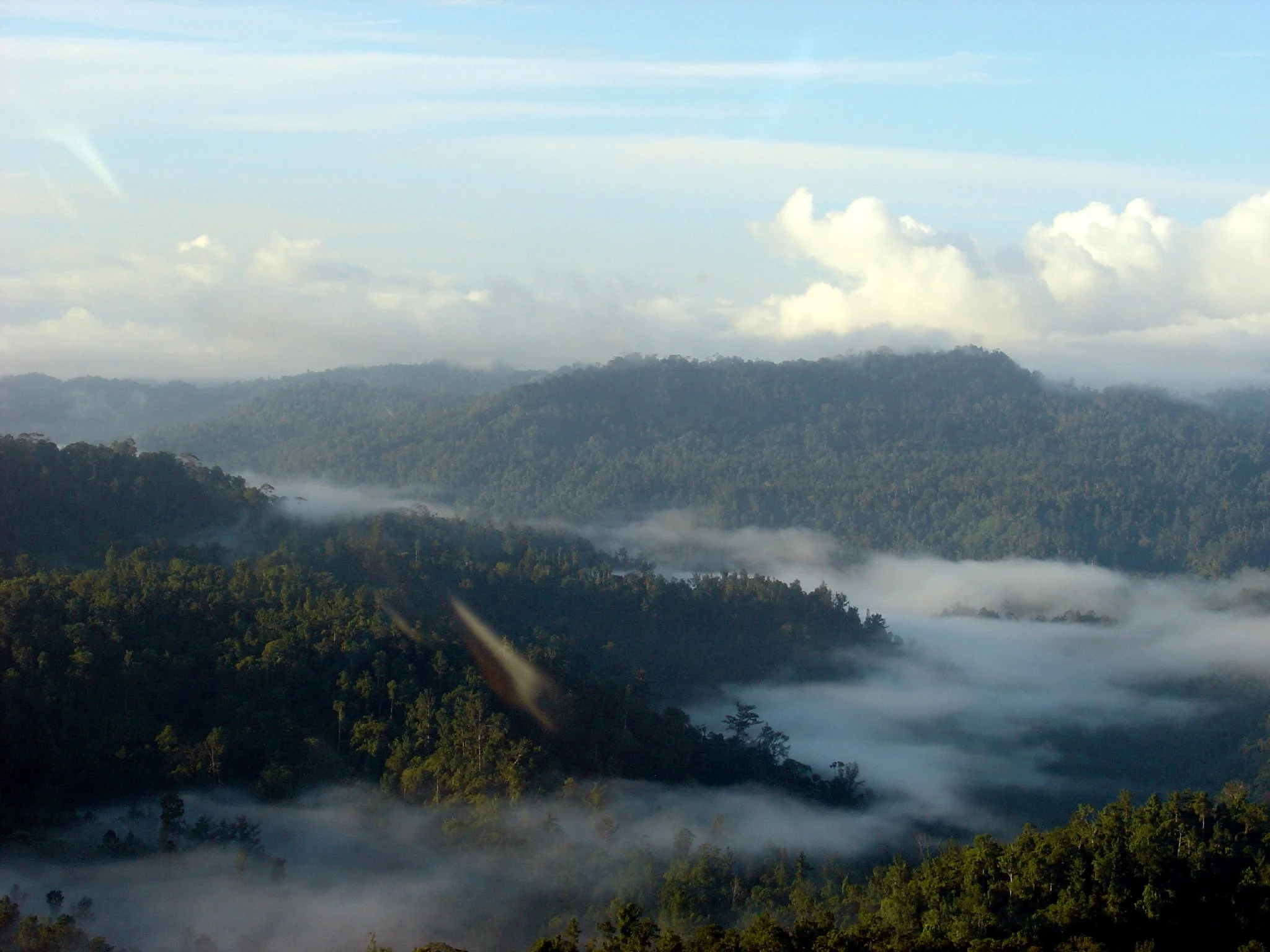
"Halmahera Island" by Eustaquio is licensed under CC BY 2.0.
Sami Reindeer Herders In Sweden Face Cultural Collapse Amid Mining And Climate Threats
By Stefanie Dazio and Malin Haarala
Sami reindeer herders in northern Sweden are confronting an existential crisis as expanding mining operations and climate change increasingly fragment the land central to their traditional way of life. In the far north of Sweden, Indigenous herders have for generations moved reindeer across vast grazing routes, but proposals to extract rare-earth minerals from the Per Geijer deposit, touted by Sweden as Europe’s largest, risk severing these migration paths altogether. Already, the enlargement of the iron-ore mine at Kiirunavaara has forced the Gabna Sami village to reroute their herds, making migrations longer and more hazardous. For herders like Lars-Marcus Kuhmunen, reindeer are culturally, economically and spiritually essential, and if migration routes are blocked, the entire Sami culture could vanish. Compounding the threat is rapid Arctic warming, which disrupts snow and grazing patterns, making flexibility of movement even more vital for reindeer survival. Swedish officials and the state-owned mining company LKAB argue the new mine could boost European supply of critical minerals and reduce reliance on Chinese imports, while critics warn it would devastate Indigenous livelihoods. The Gabna community plans to contest plans in court, but many herders remain pessimistic about their chances of preserving traditional herding in the face of industrial expansion and climate stress.
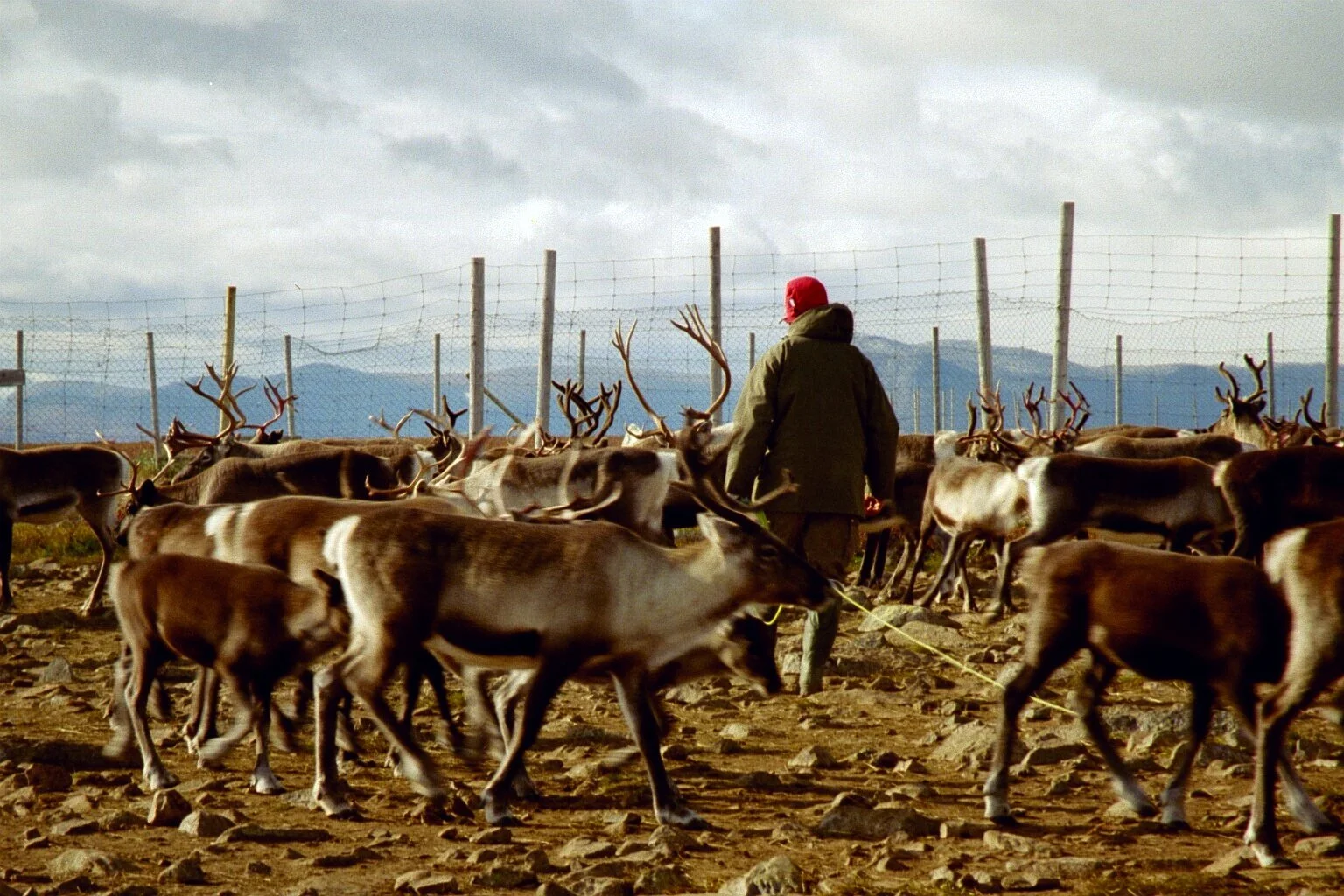
"A day at work" by Mats Andersson is licensed under CC BY 2.0.
Protests Stopped A Big Mining Project In Panama
By Gretel Kahn
In Panama, widespread protests successfully halted a major mining project — yet the story received surprisingly limited news coverage both within Panama and internationally, particularly in Canada, where the mining company is based. The protests centered on the controversial Cobre Panamá copper mine, one of the region’s largest open-pit operations, and reflected deep public concern over environmental damage, allegations of corruption and questions about national sovereignty. Tens of thousands of people participated in strikes, demonstrations and road blockades, paralyzing key transport routes and triggering significant economic disruption. Ultimately, Panama’s Supreme Court ruled the mining concession unconstitutional following pressure from civil society groups, labour unions and environmental activists. Despite the scale and impact of the movement, the issue barely registered in mainstream media, particularly outside Latin America.
American E-Waste Is Causing A ‘hidden Tsunami’ In Southeast Asia, Report Says
By Aniruddha Ghosal

"E-waste" by Ranta Janne is marked with CC0 1.0.
A new report by the Basel Action Network (BAN), highlighted in the AP article, reveals a growing “hidden tsunami” of electronic waste flowing from the United States to developing countries in Southeast Asia. Millions of tons of discarded devices, including phones, computers and other electronics, are being shipped overseas, often under the guise of “used equipment” but in reality containing hazardous materials destined for dumping or primitive recycling. These exports occur despite international regulations under the Basel Convention, which the U.S. has not ratified, and exploit loopholes in trade coding that misclassify waste to evade detection. The surge in e-waste exports comes at a time when global electronic waste generation is booming — far outpacing formal recycling efforts — and Southeast Asia already produces nearly half of the world’s total e-waste. Once these electronics arrive, many end up in landfills or informal scrapyards, where workers, often without protective gear, burn, disassemble and melt components to recover metals, releasing toxic fumes and contaminating soil and water. Recycling certifications held by some exporting companies have not prevented these practices, raising questions about their effectiveness. Southeast Asian governments including Malaysia and Thailand have begun cracking down on illegal imports, seizing hundreds of tons of waste at ports, but watchdogs warn that without stronger enforcement and global cooperation, environmental and health harms will worsen as e-waste volumes continue to grow.
Our Observations
The thread we have identified this month is the epistemic injustice in the way the AI supply chain is being built and deployed. Some companies refuse to see and acknowledge the people and environments they are exploiting when finding places to extract material from or dump waste into. This is particularly evident in the first case we present, about Eramet going into Indonesia and mining nickel on Hongana Manyawa territory, while simultaneously denying their existence on said territory. The process of invisibilization is colonial: it portrays people and places outside the centre as terra nullius, where human and more-than-human communities are present instead.
The examples we have found this month are mostly of a mining nature: they build on a history of extractive colonialism that has existed for centuries. Waste colonialism, exemplified by the case about e-waste in South-East Asia, is a newer phenomenon, although one that’s still been ongoing for decades. While this is nothing new, it’s important to point out how AI is a product of our politics, society and economics. As much as it’s changing the way we work and live, it continues to reproduce current power dynamics, because it has not been designed to change them.
There is no terra nullius on our planet: all environments are home to complex ecosystems, whether they include humans or not. From mining to waste, the AI supply chain makes use of land and other resources where communities live, and those communities are experiencing the impacts of AI development. There is always someone or something who is affected, and that’s why we need to pay particular attention to how to minimise those impacts and to make sure our models are sustainable - i.e., that they use little enough resources that their impact does not destroy entire lives and livelihoods. By making visible different epistemologies, based on the plurality of our planet, we aim to highlight alternatives for life, society and economics. Alternative epistemologies will in turn lead to alternative ways of developing a more sustainable supply chain and a kind of AI that allows for our pluralities to thrive.
We want to emphasise that the Observatory is a collective repository, and that we are always looking for submissions of case studies. This is a community-led, adaptive data collection effort. If you come across case studies similar to these, please submit them here!